
Faster, Safer Releases
Faster releases, without a growing blast radius
Your release process was built for people coordinating in Slack. Coding agents now add more change to it every week than anyone can track by hand. CloudBees Unify gives every release one record of what's approved and what's live, across the tools you already run.
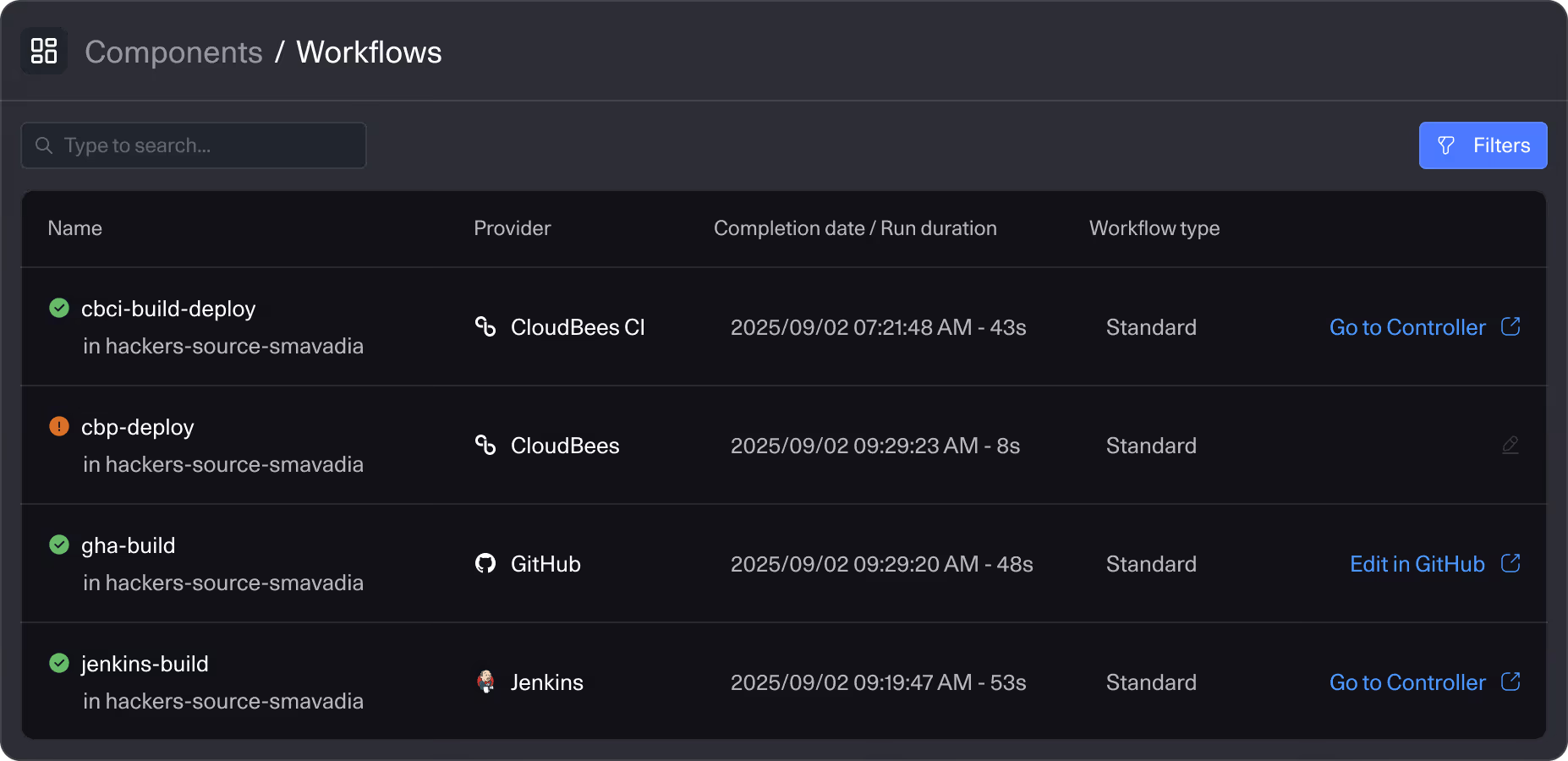

Release day still runs on Slack messages
Many teams know this routine. Someone asks whether last night's deploy is safe to promote, and six people spend forty minutes checking their own tools. The build was green, but that only tells you the pipeline ran. Whether the approval happened or the finding got cleared lives somewhere else, in a ticket or a spreadsheet.
Coding agents are adding more changes to this routine every week. A release that used to carry a dozen changes now may carry a hundred, and the go/no-go routine hasn't changed to match. Approvers still sign off, but nobody can read that much change in an afternoon. Feature flags are set up team by team, so it's hard to say what's switched on where. When something breaks, finding the change that caused it takes longer than it took to ship, and rolling back usually means another deploy.
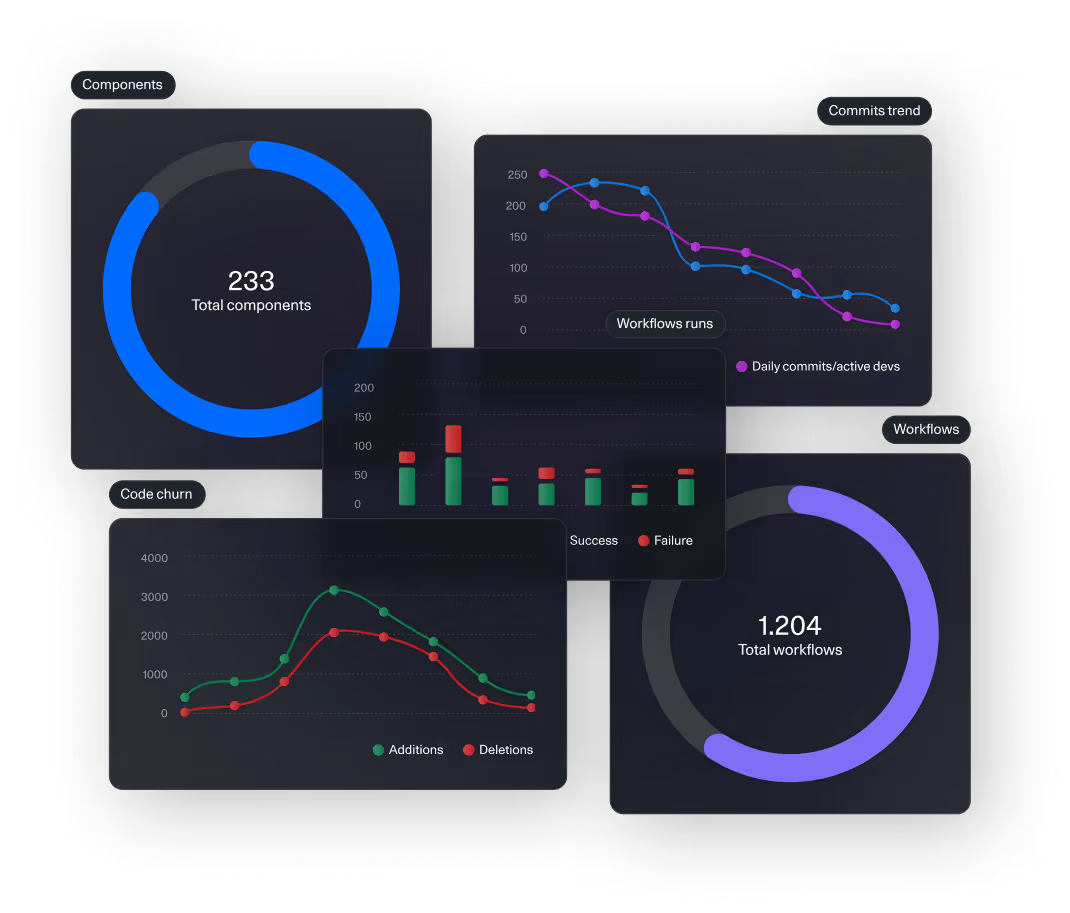

One answer to "is it safe to ship?"
CloudBees Unify brings release status and approvals from Jenkins, GitHub Actions, GitLab, and the tools you connect into one view. No more forty minutes across six tools, and blocked dependencies that show up days before release day.

One place to see what's ready
CloudBees Unify brings release status from your CI/CD tools into one view. Approvals are recorded where people give them, and you can spot a blocked dependency days before release night.

A name on every release
Every gate between environments has a named approver, so a person signs off at the point that matters. Assign approvers who are separate from the people who run the release, and separation of duties holds up even as change volume climbs.

Know what shipped last week
CloudBees Unify keeps one record of every release, from commit to build to approval to production, across the tools you connect. When something breaks, you start from the change that caused it.

Write a policy once
Define a release policy one time, and it applies to every connected pipeline. It stays in place when you add or retire a tool. Mapped templates for SOC 2, PCI-DSS, ISO 27001, and FedRAMP give you a head start in a policy language your security team already knows.

Turn features on gradually
With CloudBees Feature Management, you deploy code and release features separately. Start with 1% of users and widen the rollout as the numbers hold. If something goes wrong, a kill switch turns the feature off without a redeploy. The feature's state is part of the same release record.

Evidence that builds up as you ship
CloudBees Unify automatically records approvals, promotions, and findings as each release moves, including emergency approvals people don't always write down. Every release has a downloadable audit report, so it's ready when an auditor asks.

Human or agent, every change accounted for
The policies your developers work under apply to coding agents too. You set what an agent can reach before it runs; its actions go through your existing approvals, and nothing merges on an agent's say-so. With CloudBees Unify MCP, coding agents see the same release record your team uses: what's approved, what's blocked, and what's live.
Deliver faster without losing control
Up to
$1.5m
Potential savings for 10 apps per year
Up to
90%+
Annual maintenance reduction
Time-to-market
40%
Faster for orgs using DevSecOps
Trusted by enterprises,
loved by developers


Salesforce migrates DevOps to the cloud with CloudBees CI
Salesforce moved software development to CloudBees CI on Amazon EKS, improving productivity, security, and supporting the continuous delivery of innovative solutions on the Salesforce platform.


Autodesk gets SOC 2 without the burden
With 4,000 engineers and more than 200 applications, Autodesk runs CloudBees CI and meets SOC 2 without the compliance burden.


Acquia brings 16+ Jenkins instances under centralized, compl
Inconsistent security across 16+ Jenkins instances raised FedRAMP concerns. Consolidating on CloudBees CI gave Acquia centralized management and governed CI/CD that meets compliance requirements.

American Express CBT gains competitive advantage with CI/CD
American Express Global Business Travel won the 2019 CloudBees Innovation Award for CI/CD Automation Excellence based on its DevOps transformation.

Every release, on the record.
CloudBees Unify brings approvals, status, and evidence from your existing tools into one view.
Nothing to migrate.


