AI coding tools are helping European teams build software faster, and organizations are backing them with growing budgets. Seven in ten IT leaders in Germany, France, and the UK say the tools have sped up development at their organization, and three in four organizations have increased their AI-related delivery spending over the past year. However, fewer than half are confident they can calculate what AI-powered delivery really costs or quickly prove AI’s ROI to their board if asked.
CloudBees’ new report, The State of Code Abundance 2026, Europe Edition, explores the gap between what organizations invest in AI coding and whether they can demonstrate a return on their investment. Drawing on an independent survey of 450 IT leaders, the report examines how European organizations are scaling AI coding and how they oversee the code AI writes.
The research builds on our US State of Code Abundance report, which explored similar questions with enterprise technology leaders in the US earlier this year. European leaders report a similar disconnect as their US peers, with strong confidence in what AI coding delivers and the same struggle to put numbers behind it.
AI coding has moved from experiment to budget line
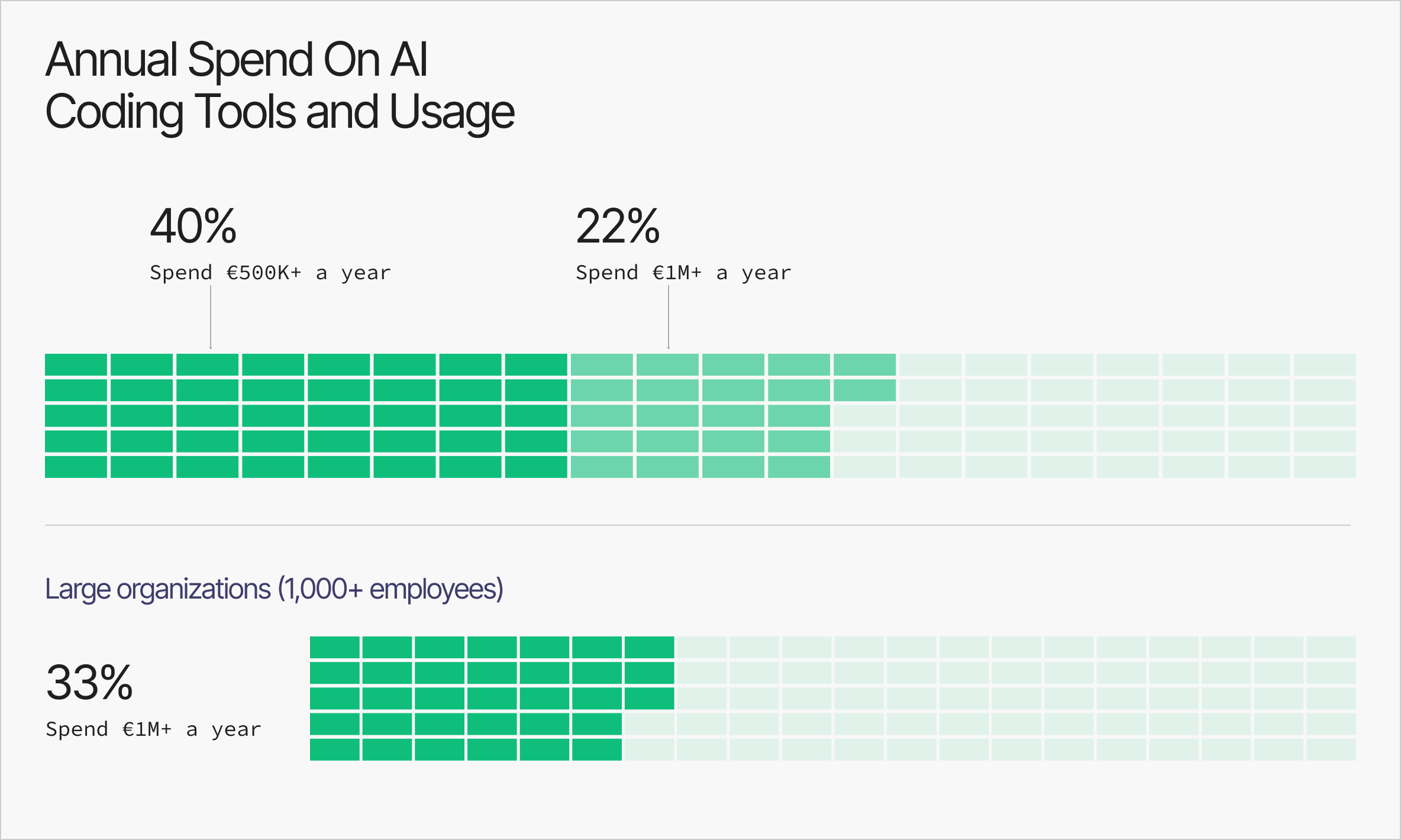
AI coding tools are now firmly built into everyday development work, with two in five European organizations (40%) spending €500,000 or more a year on AI coding. At organizations with more than 1,000 employees, a third (33%) spend €1 million or more.
For 64% of organizations, AI-related delivery spending rose over the past year and is expected to rise again over the next 12 months.
Much of what AI coding costs sits outside the AI budget
Despite steadily increasing investment, AI coding tools and usage still account for less than a tenth of the total software delivery budget in 65% of organizations. Most of that budget still goes to the people, infrastructure, and processes that software delivery depends on.
Leaders say cloud consumption is the fastest-growing cost tied to AI-powered delivery (51%), as more code runs through builds, tests, and production. Code review is close behind (46%) as developers spend more time checking what AI writes, yet many organizations don’t count that time as part of what AI costs them.
Among those who say code review is one of their fastest-growing costs, six in ten (60%) leave developer review time out when they calculate the cost of AI-powered delivery.
Despite these accounting gaps, more leaders say AI coding tools have made software delivery less expensive (44%) than more expensive (28%).
Leaders who can count AI’s cost are far more confident about its returns
As spending on AI coding increases, so does the pressure to demonstrate its financial returns. More than two-thirds of leaders (69%) expect demonstrating the ROI of AI coding to become a board requirement at their organization by the end of 2027.
Among leaders who are confident they can calculate the full cost of AI-powered delivery, 70% are also confident they could prove the ROI of AI coding within a month if their CFO or board asked.
Among leaders who aren’t confident they can calculate the full cost, only 23% are confident they could demonstrate AI ROI in that time.
Organizations struggle to trace approvals for AI-generated code
As organizations give AI agents greater autonomy, they face a growing challenge in tracking who approves changes to production code. About half of IT leaders (52%) say their organization is likely to let AI agents carry out delivery work autonomously within predefined guardrails, which means more changes will reach production with less direct human involvement.
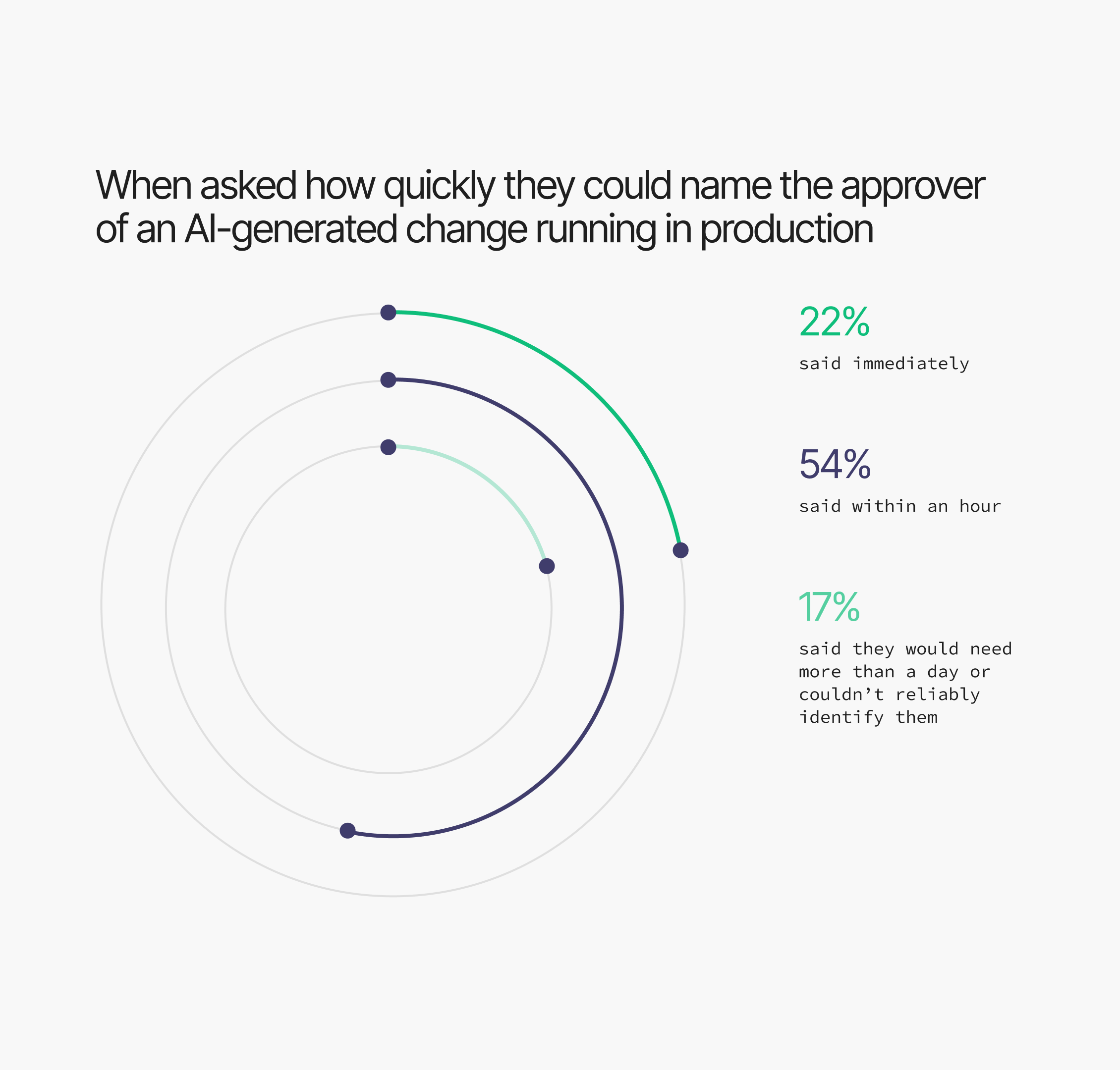
Only 22% of leaders could immediately identify who approved an AI-generated change running in production, and organizations preparing to give agents more autonomy are not much further ahead of those that aren’t. When an incident hits, a patchy approval trail means a longer, harder investigation once the fix is in, from tracing the root cause to showing auditors what happened.
The volume of changes is set to keep rising, too. Nearly two-thirds of leaders (63%) expect AI-generated code to become too much for humans to review in full, so more of that oversight will need to happen automatically.
Download the report
The full State of Code Abundance 2026, Europe edition goes deeper into how organizations in Germany, France, and the UK are scaling AI coding and what it will take to do so with confidence.
The report covers:
- Where AI coding budgets are heading, and which costs are growing fastest
- How prepared leaders are to show their boards what AI coding returns
- How approval processes are holding up as agents take on more delivery work
- Which governance concerns and capabilities leaders are prioritizing
- How data sovereignty and regulation are shaping AI coding differently in continental Europe and the UK
Download the report to see how European organizations are approaching AI-powered software delivery, and how your organization compares.